
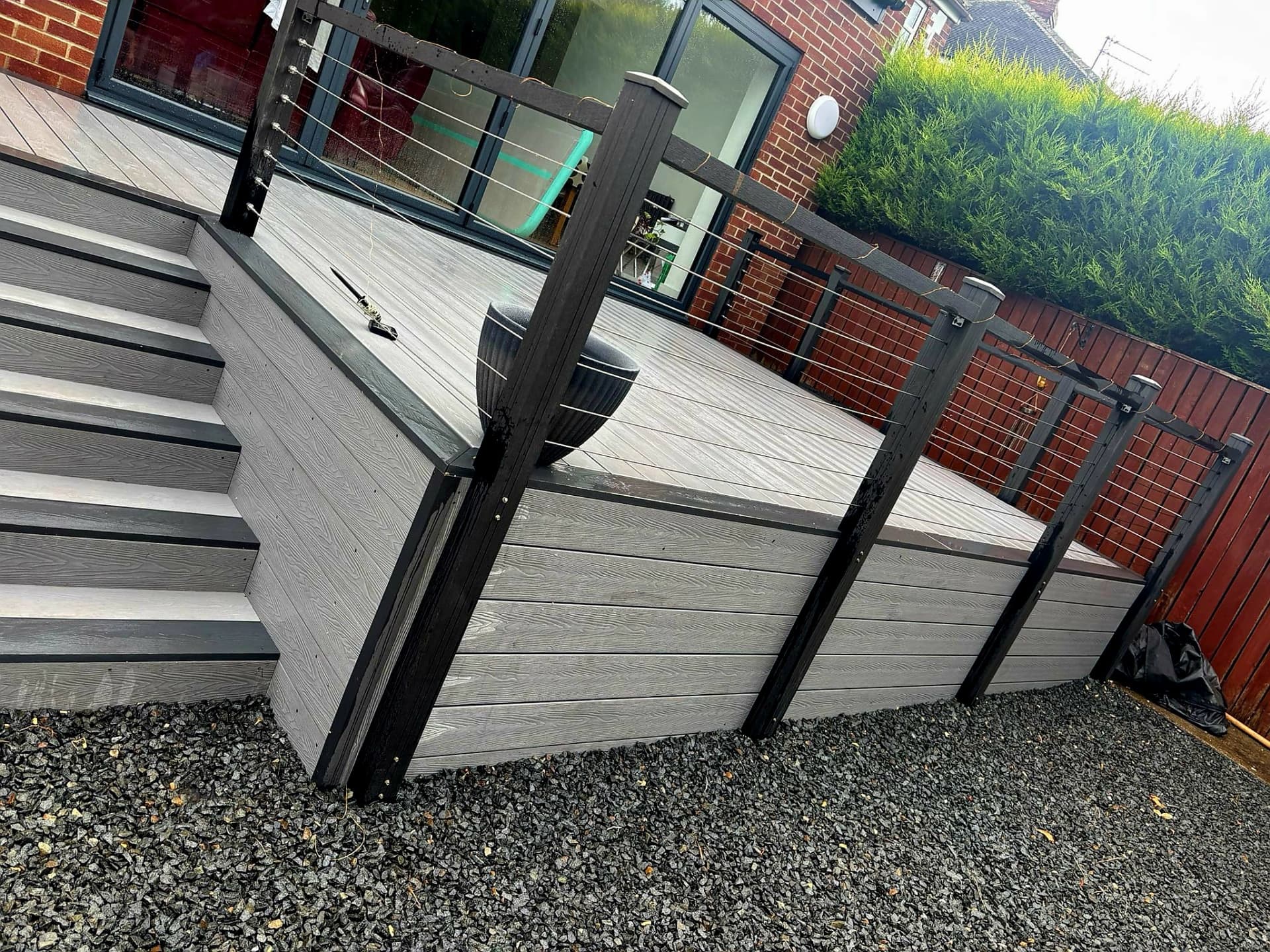
Side by side
| Composite | Timber | |
|---|---|---|
| Lifespan of boards | 20+ years | Shorter; depends on treatment and upkeep |
| Maintenance | Wash down; no staining or sealing | Clean, treat or stain every year or two |
| Rot and splinters | Doesn't rot or splinter | Can rot, split and splinter with age |
| Slip | Textured, grip-rated boards available | Gets slippery when green or wet |
| Look | Consistent colour; wood-grain finishes | Natural wood; weathers to silver-grey |
| Up-front cost | Higher | Lower |
The part nobody sees: the frame
Composite boards don't rot, but the timber frame underneath can. Decks bounce, sag and drop out of level when joists are spaced too wide for the boards, when the frame sits on soil, or when there's no airflow underneath.
We build every sub-frame to the board maker's joist spacing, on solid foundations, with weed membrane and ventilation so the frame stays dry.
When timber still makes sense
For a budget-led project, a deck you expect to replace in the medium term, or where you want a natural, weathered look, treated timber is a reasonable choice, as long as you're happy to keep up the maintenance.
Common questions
Does composite decking fade?
Good capped composite boards hold their colour far better than timber. Expect a slight change in the first months as they settle, then very little.
Is composite decking slippery?
Quality composite boards have a textured, grip-rated surface. Keeping them clear of moss and leaves keeps them safe in wet weather.
Can you lay composite boards on my old timber frame?
Only if the frame is sound, level and spaced for composite boards, which most older timber frames aren't. Usually the frame should be rebuilt.
How often does timber decking need treating?
Typically every one to two years, depending on how much sun and rain it gets.