
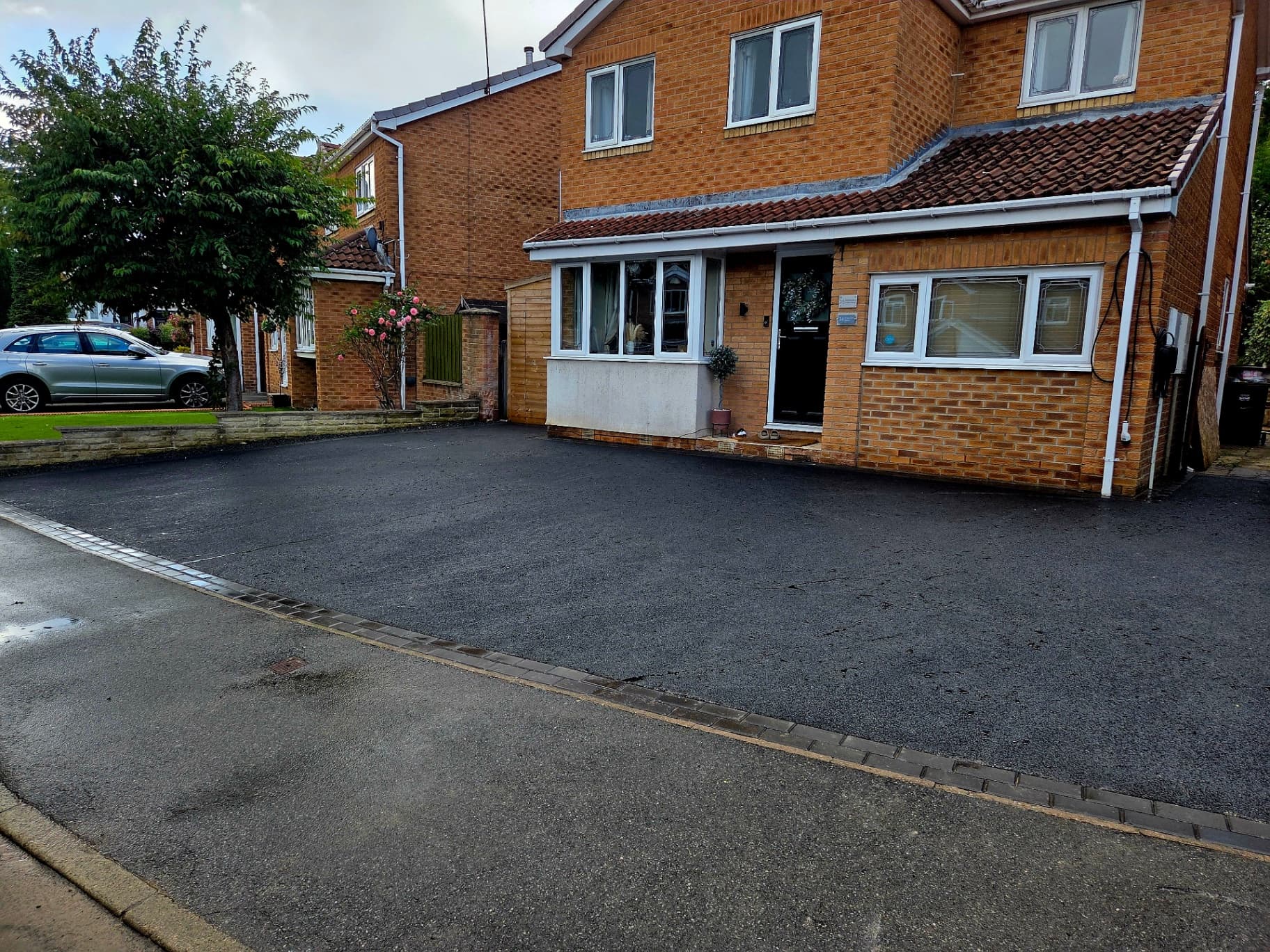
Side by side
| Tarmac | Block paving | Resin bound | |
|---|---|---|---|
| Durability | Excellent under daily use and heavy vehicles | Very good if edges are restrained and the base is right | Good for cars; depends on the base below it |
| Maintenance | Very low. Occasional sweep | Weeding and re-sanding joints, occasional jet wash | Low. Sweep and rinse; avoid oil spills |
| Drainage | Not permeable. Needs falls to a border, soakaway or channel | Permeable versions available; standard blocks need falls | Permeable, which often avoids the need for planning permission |
| Repairs | Patch repairs show | Lift and relay individual blocks | Patch repairs are hard to match |
| Looks | Clean, plain, traditional | Widest choice of colour and pattern | Smooth, modern, decorative |
| Install time | Fastest once the base is in | Slowest; every block is laid by hand | Quick to lay but weather-sensitive |
When tarmac is the right choice
If you want a driveway you never have to think about, tarmac is hard to beat. It takes daily traffic, turning cars and the odd van without complaint, and there are no joints for weeds.
I spent years working for a tarmac company before starting Infascape, and the thing that makes or breaks a tarmac drive isn't the tarmac. It's the 200mm of compacted MOT underneath and the edging holding it in.
When block paving is the right choice
Block paving suits you if you want a particular look, borders or patterns, or if you might need to dig into the drive later for services. Individual blocks can be lifted and relaid without leaving a patch.
The trade-off is maintenance. Joints need re-sanding and weeds will try their luck. Edges must be properly restrained on a concrete haunch, or the blocks start to spread.
When resin is the right choice
Resin bound gives the smartest finish of the three and is permeable, so water drains through it. That makes it a good fit for front gardens where you don't want to send water onto the road.
Resin is only as good as what it's laid on. A thin resin layer over a cracked or poorly built base will crack with it. Before laying resin, we check the existing surface and, if it isn't sound, build a proper base first.
What matters more than the surface
- Sub-base depth and compaction: we lay 200mm of MOT Type 1, compacted in layers
- Edging set on concrete so the surface has something solid to finish against
- Falls and drainage designed before any digging starts
- Quantities calculated from the area, not guessed on the day
Common questions
Which driveway lasts the longest?
On a properly built base, tarmac, block paving and resin bound can all last 10+ years. Tarmac is the most forgiving under heavy use. Most early failures are base failures, not surface failures.
Which driveway needs the least maintenance?
Tarmac. There are no joints for weeds and it only needs an occasional sweep. Resin is also low-maintenance; block paving needs the most attention.
Do I need planning permission for a new driveway?
Usually not if the surface is permeable, like resin bound or permeable block paving, or if water drains to a lawn, border or soakaway on your property. A front driveway over 5m² that drains onto the road normally needs permission.
Can resin be laid over my existing driveway?
Sometimes, if the existing tarmac or concrete is sound, level and drains properly. If it's cracked, sinking or breaking up, it needs a new base first or the resin will crack too.